👨👩👧 In brief: what matters for parents
🍊 Benefits of Vitamin C for Kids
🔎 How a lack of Vitamin C may show up
🧒 A simple example for parents
📊 Vitamin C dosage table by age
🌦 When Vitamin C becomes especially relevant
🍓 Natural sources of Vitamin C for Kids
🛍 How to Choose Vitamin C for a Child
🧃 How to Take Vitamin C Properly for Kids
⚠️ Common mistakes parents make
📌 Important information before starting
💬 Questions parents often ask
✨ The main point in short
🤍 Final thoughts for parents
Vitamin C for kids is one of the best-known vitamins in a child’s diet. Parents often search for why vitamin C is important for kids, what the signs of vitamin C deficiency in children are, what the recommended vitamin C dosage by age is, and how to choose vitamin C for kids in a clear and practical form. This vitamin plays a role in many everyday processes in the body and often becomes especially relevant during seasonal changes, active growth, adjustment to daycare or school, and periods when the diet is not as balanced as parents would like.
In children’s nutrition, vitamin C matters not as a “magic solution,” but as part of a thoughtful approach to diet and daily support. It is connected to food variety, family habits, routine, and careful attention to what a child gets from food every day. That is why it is useful for parents to understand not only the general role of vitamin C, but also the situations in which it is truly worth paying closer attention to it.
👨👩👧 In brief: what matters for parents
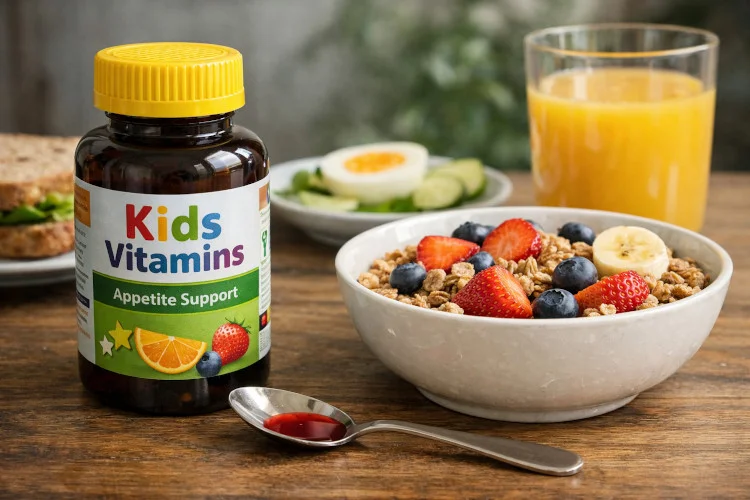
Simply put, vitamin C for children becomes especially relevant when a child’s diet is not always consistent, when they eat fruits and vegetables selectively, get tired of repetitive meals, or when the family enters a season where everyday nutritional support becomes more important. At such times, many parents also start looking at other areas — for example, vitamin D for kids — because caring about a child’s diet rarely comes down to just one nutrient.
At the same time, the main rule stays the same: first look at the child’s diet, age, product format, and how easy it is to use regularly. Children’s vitamins work best when they fit into real family life, not when they feel like a complicated routine that is hard to follow for more than a few days.
🍊 Benefits of Vitamin C for Kids
Vitamin C takes part in everyday processes that matter for a growing body. It is not needed “just in case,” but as a normal part of a complete child-friendly diet. Its role becomes especially noticeable when parents are trying to build a calm, practical, and easy-to-follow foundation for daily nutritional support.
What is usually associated with the benefits of vitamin C for kids:
- it supports everyday metabolic processes;
- it helps the body use certain nutrients;
- it is part of a child’s diet during periods of growth and high activity;
- it becomes especially relevant in seasons when the diet is less varied;
- it is often included in children’s daily nutrition support products.
Parents also often look at vitamin C not on its own, but together with other areas of children’s nutrition — for example, with zinc for kids — when they want a more complete approach to balanced nutrition. This makes sense: in real life, nutrients do not exist separately, but work as part of an overall daily care routine for the child.
🔎 How a lack of Vitamin C may show up
A lack of vitamin C in children is not always obvious right away. Very often, parents do not first notice a “classic picture,” but more general signals: the child eats very few fruits and vegetables, sticks to a limited range of foods, does not like berries, and the family menu becomes repetitive from time to time. That is why it is important to look not only at separate symptoms, but also at the child’s eating habits as a whole.
Parents usually notice not one specific signal, but the broader picture: repetitive eating, low interest in fruits and vegetables, a limited diet, and periods when the child gets very few natural sources of vitamin C. This kind of approach helps families assess the situation more calmly and avoid drawing conclusions based on just one sign.
What parents often pay attention to:
- a very limited intake of fruits, vegetables, and berries;
- strong picky eating habits;
- long periods of repetitive meals;
- refusal of fresh foods;
- seasons when fresh sources appear less often in the menu.
It is not a good idea to make conclusions based only on outward signs. It is much more useful to look at the wider picture: what the child eats over the course of a week, whether there is consistency, how varied the vitamin sources in the diet are, and whether the current routine is practical for the whole family.
🧒 A simple example for parents
Let’s imagine a common situation. A child goes to daycare, is not very eager to eat breakfast in the morning, chooses mostly familiar foods throughout the day, and only agrees to fruit if it is an apple or a banana. Vegetables are eaten rarely, berries only occasionally, and during the colder season the menu becomes even narrower. In that case, it makes sense for parents to pay attention to the vitamin C category, and at the same time also look at vitamin C + zinc for kids if they want a more thought-out option for a period when the child’s diet needs extra attention.
That does not mean every child needs the same product. But this example clearly shows why the topic of vitamin C comes up so often in families with children: not because of big promises, but because of everyday reality, where ideal nutrition does not always happen.
📊 Vitamin C dosage table by age
Below is a general reference table often used as a starting point for understanding age-related needs. The exact approach always depends on the child’s diet, individual needs, and professional guidance.
| Child’s age | Approximate daily vitamin C amount |
|---|---|
| 1–3 years | 15 mg |
| 4–8 years | 25 mg |
| 9–13 years | 45 mg |
| 14–18 years | 65–75 mg |
This table is not meant for parents to calculate every milligram every day, but to better understand the context of age-based needs. In real life, regularity, food variety, and a sensible choice of the right product format matter most.
🌦 When Vitamin C becomes especially relevant
There are certain times when parents return to the topic of vitamin C more often. Usually, this is not about anything urgent, but about life stages and seasonal changes.
Vitamin C is most often considered when:
- a child is starting daycare or school;
- the colder season begins;
- there are fewer fresh foods in the menu;
- the child is a very selective eater;
- the family wants to rethink basic dietary support;
The topic of natural immunity for kids and steady daily habits becomes more important.
There is also often more interest in this category during autumn and winter, when parents read more about the cold season for kids and start paying closer attention to product composition, dosage form, and overall ease of use.
🍓 Natural sources of Vitamin C for Kids
When it comes to vitamin C, the first step should always be diet. This is especially important for children because habits develop gradually, and getting used to different tastes is best started through everyday food.
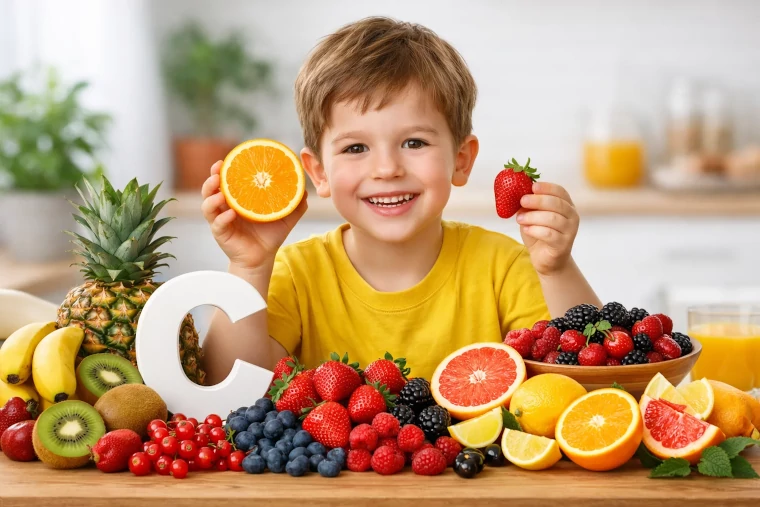
Foods that may serve as natural sources of vitamin C include:
- citrus fruits;
- kiwi;
- strawberries;
- blackcurrants;
- sweet peppers;
- broccoli;
- tomatoes;
- some seasonal fruits and berries.
But in real life, there is an important detail: a child may not like sour tastes, may refuse vegetables, or may only accept two or three familiar foods. That is exactly why children’s vitamin C formats remain so popular. They do not replace food, but sit alongside it as a way to make daily support more convenient and more predictable for the family.
🛍 How to Choose Vitamin C for a Child
Choosing vitamin C for children is not about “what is most popular,” but about what fits the child’s age and the family’s lifestyle. One child may be fine with a syrup, another may do better with a chewable form, while for a third child a neutral taste and a simple formula without a complicated routine may matter most.
What parents should pay attention to when choosing:
- the age group the product is designed for;
- dosage form: drops, syrup, chewable tablets, powder;
- a simple formula without unnecessary extras;
- clear dosage guidance;
- a taste the child will actually accept;
- ease of regular use;
- whether it includes combinations with other ingredients, if that suits the family’s needs.
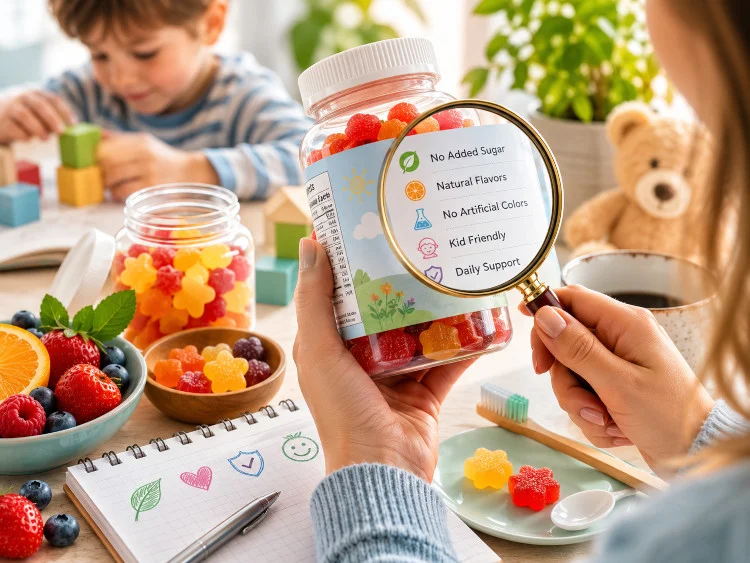
A good product for children is not the one with the brightest packaging, but the one that parents understand and that fits the child’s everyday routine. Sometimes a simple single-ingredient product is the better choice, while in other cases a more complex format may make sense if the family is looking at nutrition more broadly.
Vitamin C for Kids: Popular Products for Everyday Support
Carlson
Kids’ chewable tablets with vitamin C.
- Age: From 4 years old
- Form: Chewable
- Flavor: natural mandarin
You will be redirected to our partner’s website.
Big Friends
Chewable vitamin C, orange-flavored.
- Age: from 2 to 18 years old
- Form: Chewable
- Flavor: orange
You will be redirected to our partner’s website.
California Gold Nutrition
Liquid vitamin C for kids, USP-grade.
- Age: From 4 years old
- Form: Liquids
- Flavor: tart orange
You will be redirected to our partner’s website.
🧃 How to Take Vitamin C Properly for Kids
The approach to giving vitamin C should be calm and practical. Even the simplest product should not be turned into a complicated plan with multiple reminders and constant control. The simpler and more natural the format feels, the easier it is for both the child and the parents to follow the routine.
A few basic principles:
- follow the child’s age;
- check the instructions for the specific product;
- avoid combining several children’s vitamin C products without a clear reason;
- remember that some vitamin C already comes from food;
- focus on consistency rather than random use “from time to time.”
The best format is the one the family can use calmly and consistently. If the child dislikes the taste or the form, even a well-designed product may not work well in the long run.
⚠️ Common mistakes parents make
When it comes to children’s vitamins, mistakes are usually caused not by lack of care, but by information overload. Parents read lots of advice, compare dozens of products, and in the end may choose something that is not actually the most practical option.
The most common mistakes include:
- choosing a product without considering age;
- focusing only on bright packaging;
- not taking the child’s actual diet into account;
- giving several similar products at once;
- choosing a format the child does not want to take;
- expecting too much from one vitamin;
- starting without understanding the overall dietary picture.
It is most helpful to see vitamin C as part of a larger system: diet, routine, seasonality, the child’s habits, and the simplicity of daily use.
📌 Important information before starting
Before choosing vitamin C for a child, it is worth calmly answering a few questions. How varied is the child’s diet? Are there fruits, berries, and vegetables in the menu? Is the taste of the chosen product suitable for the child? Is the format age-appropriate? Is vitamin C already included in other children’s products you have at home?
It is also important to remember that children’s vitamins are not a replacement for food and are not a universal answer for every situation. They work as part of a sensible dietary support approach, not instead of one. When the choice is made without rushing, it becomes much easier for parents to find a format that is truly suitable and comfortable.
💬 Questions parents often ask

That depends on the child’s age, diet, the chosen product, and its dosage. Parents should always check the instructions and remember that vitamin C may already be coming from regular food.
The best option is the one that suits the child’s age and that the child accepts calmly. For younger children, liquid forms are often more convenient; for older children, chewables may work better.
Not always. Sometimes a separate product is enough, while in other cases parents look at combination formulas. It depends on the child’s diet and the goal of choosing the product.
In many cases, yes, if the child’s diet is varied and includes suitable foods. But when eating habits are very selective, parents often look for additional convenient formats.
The age category, dosage, format, simplicity of the formula, and ease of everyday use.
✨ The main point in short
🤍 Final thoughts for parents
The best approach to vitamin C for children is a calm one, without extremes. There is no need to expect too much from a single product, but it is also not worth underestimating the importance of basic nutritional support. If a child’s diet is limited, fresh sources do not appear in the menu regularly, and the family needs a clear and convenient format, the vitamin C category can become a useful part of the daily routine.
The main thing is to choose a child-appropriate product by age, look realistically at the family’s lifestyle, and remember that the best results do not come from perfect theory, but from a clear system that is easy to follow every day.