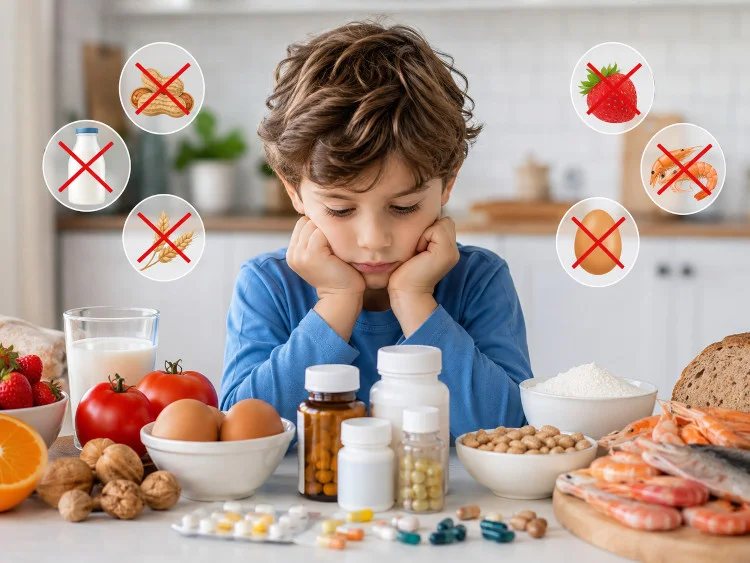

👨👩👧 Quick Take for Parents
🧩 What Vitamin C + Zinc Means and Why They Are Combined
🍊 Why Vitamin C Matters for Kids
🌿 Why Zinc Matters for Kids
🛡️ Why Vitamin C and Zinc Are So Often Discussed for Immunity
📊 Vitamin C and Zinc Dosages by Age
⚠️ Upper Limits: Why More Is Not Always Better
🥦 Food Sources of Vitamin C and Zinc for Kids
🧠 When Vitamin C + Zinc May Make Sense
🚫 When You Should Not Automatically Buy a Combination Product
🔎 How to Choose Vitamin C + Zinc for Your Child
❗ Common Mistakes Parents Make
✅ What to Know About Vitamin C and Zinc for Kids
❓ Frequently Asked Questions About Vitamin C and Zinc for Kids
If you look at the topic without marketing language, vitamin C + zinc is not a “magic immune formula,” but a combination of two nutrients that genuinely support normal immune function, growth, and tissue repair. Vitamin C works as an antioxidant, helps with collagen production, and supports iron absorption. Zinc is important for immune function, DNA and protein synthesis, growth, and healing. At the same time, for most healthy children, the foundation stays the same: balanced nutrition first, and supplements only when there is a clear reason.
👨👩👧 Quick Take for Parents
- Vitamin C and zinc are important for immune function, but they do not replace food, sleep, and everyday care.
- Healthy children with a varied diet do not always need supplements.
- A “vitamin C + zinc” product is more often seen as a convenient all-in-one option, not something every child automatically needs.
- It is better to choose a product based on age, dosage, form, and overall formula rather than bold claims on the label.
🧩 What Vitamin C + Zinc Means and Why They Are Combined
Vitamin C and zinc are often paired because both are linked to immune function, but they do different jobs. Vitamin C is a water-soluble vitamin involved in antioxidant protection, collagen synthesis, and immune cell support. Zinc is a mineral needed by cells throughout the body, including immune cells, and it is also important for children’s growth and development. That is why the two are often combined in one product for everyday nutritional support.
That does not mean a child necessarily needs a “2-in-1” supplement. In practice, what matters is not the trendy combination itself, but whether the child is getting enough of these nutrients from food and whether there is a real reason to consider a supplement.
🍊 Why Vitamin C Matters for Kids
Vitamin C helps protect cells from oxidative stress, supports collagen formation, helps with tissue repair, and improves the absorption of non-heme iron from food. For children, one of the most important points is that it supports normal immune function and needs to be consumed regularly because the body does not store large amounts of it for long. That is why it helps parents to understand separately how to choose vitamin C for kids and which forms are usually preferred for daily use.
🌿 Why Zinc Matters for Kids
Zinc is important for growth and development, DNA and protein synthesis, immune defense, tissue repair, and normal taste perception. During active growth periods, adequate zinc intake matters even more because a child’s body is constantly building new tissues and using this mineral in many biological processes. That is why the topic of zinc for kids for immunity and growth is often discussed separately when parents want to understand not only immune support, but also the broader nutritional role of minerals.
🛡️ Why Vitamin C and Zinc Are So Often Discussed for Immunity
The immune system needs both vitamin C and zinc. But it helps to separate two ideas: first — these nutrients really do matter for normal immune function; second — that does not mean the more you give, the “better” immunity will work. For most children, the real foundation is adequate nutrition, not high-dose supplements “just in case.” That is why this kind of supplement should be looked at more broadly, in the context of how to support natural immunity in children.
Information about colds is often interpreted too simply. That means a vitamin C + zinc product should not be presented as a guarantee that a child will not get sick.
📊 Vitamin C and Zinc Dosages by Age
Below is a practical table with recommended daily intake.
| Age | Vitamin C per day | Zinc per day | What parents should keep in mind |
|---|---|---|---|
| 1–3 years | 15 mg | 3 mg | It is better to choose a simple form with a clear dose and a formula that is not overloaded |
| 4–8 years | 25 mg | 5 mg | Chewable forms may already be an option, but it is important to watch sugar and added ingredients |
| 9–13 years | 45 mg | 8 mg | It is worth checking not only the format and taste, but also the real daily dose |
| 14–18 years, boys | 75 mg | 11 mg | It is important not to duplicate ingredients if a teen is already taking a multivitamin |
| 14–18 years, girls | 65 mg | 9 mg | It is better to choose a product based on practical daily use and an appropriate dose |
⚠️ Upper Limits: Why More Is Not Always Better
Vitamin C and zinc both have upper intake limits. These are not target amounts, but thresholds above which the risk of unwanted effects increases.
This is one of the key points when choosing a supplement for children: if a child is already taking a multivitamin or a separate mineral, combining several products without checking the total amount is not a good idea. Too much vitamin C may cause digestive discomfort, and too much zinc over time may interfere with normal copper metabolism and create other problems.
🥦 Food Sources of Vitamin C and Zinc for Kids
Vitamin C is usually easier to get from food: good sources include citrus fruits, strawberries, blackcurrants, peppers, broccoli, Brussels sprouts, and potatoes.
Zinc comes from different foods: meat, seafood, dairy products, legumes, whole grains, nuts, and seeds. In vegetarian children, zinc intake may sometimes be lower, so this part of the diet deserves more attention.
🧠 When Vitamin C + Zinc May Make Sense
This kind of supplement is not discussed because “every child needs immunity in a bottle,” but when there are practical reasons to review the diet or consider nutritional support. For example, this may be relevant when a child has a very limited menu, is highly selective with food, eats very few fruits and vegetables, has few zinc-rich foods in the diet, or when a healthcare professional has already reviewed the diet and feels food alone may not be enough.
Still, the general rule stays the same: first evaluate the diet, then choose a supplement if needed. This question comes up especially often during times when parents are searching for what to give kids during cold season, trying to find something practical for everyday support without unnecessary overlap in ingredients.
🚫 When You Should Not Automatically Buy a Combination Product
🛍️ Which Vitamin C + Zinc for Kids to Choose: Forms, Dosages, and Age-Based Options
Lifeable
Kids’ chewable tablets with elderberry, vitamin C, and zinc
- Age: From 4 years old
- Form: Chewable
- Flavor: Berry
You will be redirected to our partner’s website.
GummiKing
Echinacea, vitamin C, and zinc for children
- Age: 2+
- Form: Chewable
- Flavor: strawberries, oranges, lemons, grapes, cherries and grapefruit
You will be redirected to our partner’s website.
California Gold Nutrition
Immune support with vitamins A, C, E, and zinc
- Age: From 4 years old
- Form: Chewable
- Flavor: tropical berries
You will be redirected to our partner’s website.
🔎 How to Choose Vitamin C + Zinc for Your Child
Is the Product Right for Your Child’s Age?
What Is the Dose per Serving?
Do not focus only on what looks attractive on the front of the package. Look at how many milligrams of vitamin C and zinc your child gets in the daily serving. The dose should make sense for the child’s age and should not push total intake too high if other supplements are already being used.
Which Form Is Most Practical for Your Child?
Syrups and drops are often easier for younger children, chewables may be better for kids who care about taste and ease of use, and tablets are not suitable for everyone. The “best” form is the one your child can actually take as directed without daily stress. This is a practical decision, not a question of whether one nutrient form is magically better than another.
What Else Is in the Formula?
Check sugar, sweeteners, extra vitamins and minerals, flavors, and allergens. This matters even more with chewable products because they can look like treats, which makes it easier for parents to underestimate the real dose. The same rule applies here too: “tasty” should not mean “too much.”
| Selection factor | What to check | Why it matters |
|---|---|---|
| Age | What age group the product is intended for | Children’s vitamin C and zinc needs vary by age |
| Vitamin C dose | How many mg are in the daily serving | A very low dose may be mostly symbolic, while a very high one may be unnecessary |
| Zinc dose | How many mg are in the daily serving | Zinc should not be duplicated across multiple supplements |
| Form | Syrup, drops, chewables, gummies | The product should be practical for your child specifically |
| Formula | Sugar, sweeteners, flavors, extra ingredients | A children’s formula should be clear and not overloaded |
| Compatibility with other supplements | Whether the child already takes multivitamins or other minerals | This helps avoid overlapping ingredients |
❗ Common Mistakes Parents Make
Mistake 1. Choosing a product only because it says “for immunity.”
What is written on the label does not replace understanding the dose and the right age group.
Mistake 2. Giving several products with overlapping ingredients.
That makes it easy to go over a reasonable intake level, especially with zinc.
Mistake 3. Using a supplement instead of working on the child’s diet.
If a child barely eats fruits, vegetables, protein foods, or legumes, one bottle of vitamin C + zinc will not solve the bigger nutrition problem.
Mistake 4. Expecting guaranteed protection from colds.
Vitamin C and zinc matter, but that does not mean automatic protection.
✅ What to Know About Vitamin C and Zinc for Kids
Vitamin C + zinc is a logical but not mandatory combination of two important nutrients. It can be a practical format for a children’s supplement when one product with a clear dose is preferred. But a good choice does not begin with marketing promises. It begins with a realistic look at the child’s diet, age, product form, and daily dosage. For most healthy children with a varied diet, supplements should not automatically become an everyday habit.
❓ Frequently Asked Questions About Vitamin C and Zinc for Kids

No. It is not a default supplement that every child needs. It is one option that may be considered based on diet, age, and the specific situation.
Both nutrients are important for immune function, but that is not the same as guaranteed cold prevention.
If a supplement is needed, the deciding factors are usually dosage convenience and formula. A combination can be practical because it puts two nutrients in one product, but what matters more is whether the dose and age fit are appropriate.
In many cases, yes. Vitamin C is found in fruits and vegetables, while zinc comes from meat, seafood, dairy, legumes, grains, nuts, and seeds.
Look at age suitability, the daily serving dose, the form of the product, and the full formula, including sugar, sweeteners, and other micronutrients. It is also important to check whether the child is already getting vitamin C or zinc from other supplements.
Yes. Both nutrients have upper intake limits, and going over them without a clear reason is not a good idea.