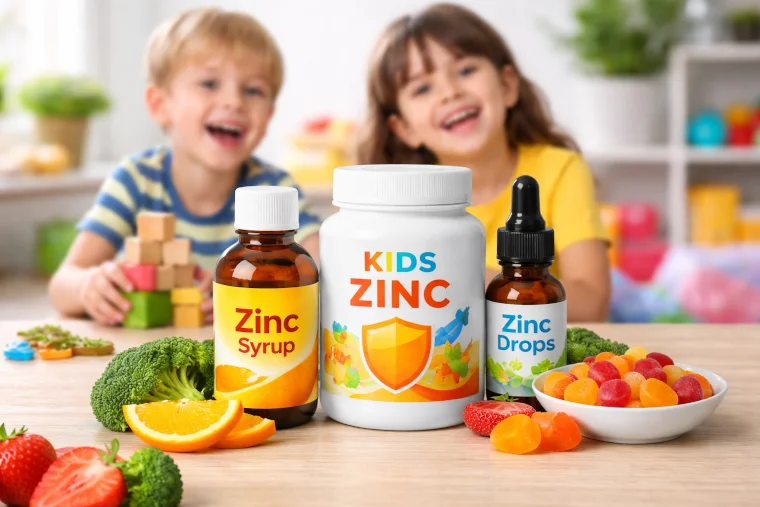

At 11, parents often notice several changes at once: the child is growing quickly, gets more tired after school, eats breakfast less willingly, asks for sweets more often, and the first skin breakouts appear.
In this situation, it is tempting to “give vitamins,” but a large all-in-one complex is not always the best choice. It is important to understand the main need: growth, fatigue, skin, a diet without fish, or seasonal support.
Main Points for Parents
Vitamins for an 11-year-old child should be chosen not by the number of ingredients, but by what is currently causing concern.
If the child has suddenly grown and gets tired after sports, first look at diet, protein, vitamin D, calcium and sleep. If there is no energy after school, check breakfast, water intake, bedtime and overload from extracurricular activities. If pimples have appeared, consider skin care, sweets, stress, hormonal changes and only then zinc.
Iron, iodine, vitamin A and high doses of vitamin D should not be given “just in case.”
What to check before buying
Before choosing a supplement, look not only at the product name and the age on the label, but also at a few everyday factors:
- what exactly has changed in the child: growth, fatigue, skin, appetite, studying or frequent illnesses;
- whether the child has a proper breakfast, protein in the diet, fish, calcium-rich foods and outdoor walks;
- how much the child sleeps and whether school, activities and evening screen time are becoming too much;
- which supplements the child already takes and whether vitamin D, zinc, vitamin A, iodine or iron are repeated;
- whether the form is convenient: capsule, chewable tablet, syrup or liquid omega-3.
🧭 How we approach supplement choice for 11-year-old children
A supplement should respond to a specific parental concern: growth, fatigue, skin, lack of fish in the diet, or seasonal pressure.
We look not only at the formula, but also at the child’s everyday routine: what time they go to bed, whether they eat breakfast before school, whether they have a proper lunch, how many activities they have each week, and whether dinner is being replaced by a sweet snack. Sometimes a supplement really is appropriate, and sometimes the first step should be routine, nutrition or a medical consultation.
Before choosing, it is important to check the recommended age, dosage, form of intake and the composition of supplements already being used. If symptoms are noticeable — severe fatigue, paleness, dizziness, sudden weight changes, severe breakouts or visible growth concerns — it is safer to start with a doctor, not with a new bottle of vitamins.
Article Navigation
- ✅ Which vitamins may be needed for an 11-year-old who is growing, tired and eating worse
- 📏 Vitamins for growth in an 11-year-old child: when they are truly appropriate
- ⚡ An 11-year-old gets tired after school: which vitamins to consider first
- 🧴 Zinc for an 11-year-old with acne: when it may help and when a dermatologist is needed
- 🧠 Omega-3 DHA for an 11-year-old: if the child does not eat fish and struggles with school
- 🍊 Vitamin C with zinc for an 11-year-old: how to avoid excess during cold season
- ⚖️ How to choose vitamins for an 11-year-old by symptoms, not advertising
- 🚫 Which supplements should not be given to an 11-year-old “just in case”
- 🩺 When fatigue, growth or skin problems need a doctor, not another vitamin bottle
✅ Which vitamins may be needed for an 11-year-old who is growing, tired and eating worse
At 11, the same complaint can have different causes. A child is tired — this may be school pressure, late bedtime, a poor breakfast or a lack of certain nutrients in the diet. Pimples appear — this may be preteen skin, sweets, stress, skin care issues or low zinc intake. The child is growing quickly — then it is important to look not only at vitamins, but also at nutrition, protein, calcium, vitamin D and sleep.
That is why the question which vitamins to choose for an 11-year-old child should start not with the bottle, but with the situation. What has changed in recent weeks: appetite, sleep, skin, energy, sports, school load, diet?
If there is one clear issue, it is easier to choose targeted support. If everything appears at once — fatigue, growth, pimples, poor appetite and frequent illnesses — it is better not to collect five supplements, but to calmly assess routine, nutrition and symptoms first.
📏 Vitamins for growth in an 11-year-old child: when they are truly appropriate
At 11, growth often becomes very noticeable: sneakers that recently had “room to grow” start to feel tight after a couple of months. The child gets taller, posture changes, trousers quickly become short, and fatigue appears after sports or physical education.
During a period of rapid growth, nutrition, sleep and regular dietary support are especially important. If the menu is low in protein, dairy products or suitable alternatives, and there is little time in the sun, vitamins for growth in an 11-year-old child can be considered additional support, but not a way to “speed up growth.”
For growth, the body needs energy from food, protein, vitamin D, calcium, magnesium, enough sleep and overall health. If the child eats little, skips breakfast, rarely goes outside or falls asleep late, vitamins should not replace the basics.
Vitamins for growth in an 11-year-old child may be appropriate if the diet is limited, sports load is high, or a doctor sees a risk of deficiency. But if the child is noticeably shorter than peers, growth suddenly slows, weight drops or constant weakness appears, it is better to discuss this with a specialist first.
⚡ An 11-year-old gets tired after school: which vitamins to consider first
After school, a child may come home with no energy, get irritated by homework, ask for sweets and say they “do not want anything.” This is not always a lack of vitamins. Often, late bedtime, a weak breakfast, too little water, too many activities and evening phone use instead of rest are part of the picture.
If a child comes home exhausted after school, first look at sleep, breakfast, water and schedule. When the routine is generally fine but the diet remains uneven, vitamins for fatigue in an 11-year-old schoolchild may be one gentle form of support.
An 11-year-old gets tired after school is not only a question about supplements. Sometimes a schoolchild needs real recovery: a calmer evening, a filling breakfast, water, protein in the diet and a pause between lessons and activities.
During demanding periods, parents often consider an age-appropriate multivitamin, vitamin D, magnesium or omega-3. It is better to choose one clear form of support and monitor the situation. If fatigue is constant, with paleness, dizziness, palpitations, shortness of breath or a sudden drop in activity, it is better not to choose a complex on your own.
🧴 Zinc for an 11-year-old with acne: when it may help and when a dermatologist is needed
At 11, the skin may begin to change: oily shine, small breakouts, irritation, more frequent touching of the face and embarrassment at school. In this situation, parents want a simple solution, but acne rarely depends on one nutrient alone.
With the first breakouts, it is important not to rely only on supplements: the skin needs gentle care, less squeezing, normal sleep and a calm approach to sweets. If the diet is poor and contains little meat, fish, eggs, legumes or nuts, zinc for 11-year-old children for skin may be appropriate in an age-appropriate dose.
Skin is also influenced by hormonal changes, stress, diet, lack of sleep and the habit of touching the face. That is why zinc should not be seen as a standalone “anti-acne” solution.
Zinc for an 11-year-old child with acne may be helpful support if there are reasons to suspect low zinc intake from food. But high doses without a clear need are not appropriate. If breakouts are painful, inflamed, numerous or leave marks, it is better to see a dermatologist.
🧠 Omega-3 DHA for an 11-year-old: if the child does not eat fish and struggles with school
School demands increase noticeably at 11: more subjects, tests, homework and independence. A child may get tired of reading faster, take longer to get into homework or find it harder to concentrate in the evening.
If fish is almost absent from the menu, the diet may provide too few omega-3 fatty acids. In this situation, DHA for 11-year-old children is better viewed not as a “vitamin for grades,” but as nutritional support, especially during periods of high school demand.
DHA is one of the omega-3 fatty acids often discussed in the context of brain and vision nutrition. But it is important to be honest: DHA does not turn a child into a top student and does not replace sleep, a proper breakfast, movement and breaks between lessons.
Omega-3 for an 11-year-old child can be a useful part of the diet if fish appears rarely or the child refuses it completely. When choosing, pay attention to the amount of DHA per serving, age-appropriate dosage and form. If there is a fish allergy, chronic illness, blood clotting concerns or medication use, omega-3 should be discussed with a doctor.
🍊 Vitamin C with zinc for an 11-year-old: how to avoid excess during cold season
In autumn and winter, a child goes to school, uses transport, attends activities, meets many other children and may look more tired by the end of the week. During this period, parents often think about seasonal support, especially if the child recovered slowly from colds last winter.
When school, transport and activities bring many contacts and little time for recovery, vitamin C with zinc for teenagers may be seasonal support. But it should not be added on top of multivitamins if zinc and vitamin C are already included.
This combination should not be seen as protection from all illnesses. Sleep, nutrition, walks, hygiene and recovery after activity remain more important than any supplement.
Vitamin C with zinc for an 11-year-old child should be chosen by age and dosage. Chewable forms should not become candy, even if the child likes the taste. Usually, this type of support is considered seasonally, not as a permanent daily supplement without a reason. If the child gets sick often, recovers slowly or misses weeks of school, it is better to discuss the situation with a doctor.
⚖️ How to choose vitamins for an 11-year-old by symptoms, not advertising
The main question before buying is not “which vitamins are the best,” but “what exactly has changed in the child.” A supplement is usually chosen for a reason: the child is tired, has grown suddenly, eats worse, has pimples, does not eat fish or struggles to get into the school rhythm.
Below is a table with real situations that most often lead parents to think about supplements.
| What worries parents | What to check before buying | What may be appropriate |
|---|---|---|
| Grows quickly, slouches, gets tired after sports | Protein in the diet, breakfast, sleep, outdoor walks, calcium-rich foods | Age-appropriate growth complex; vitamin D or calcium — if intake is low and dosage suits the age |
| Lies down with no energy after school, gets irritable, asks for sweets | Bedtime, morning meal, water intake, whether there are too many activities | Magnesium, vitamin D or an age-appropriate multivitamin — if there is a clear reason for support |
| Pimples, oily shine, child touches the face | Skin care, sweets, stress, sleep, squeezing breakouts | Zinc in an age-appropriate dose; for inflammation — dermatologist |
| Almost does not eat fish and gets tired quickly while studying | Whether fish is eaten 1–2 times a week, whether omega-3 taste and form are acceptable | Omega-3 with DHA in a form the child will actually take |
| Gets tired more often in autumn and winter and recovers more slowly | Sleep, nutrition, outdoor walks, recovery after school | Vitamin C with zinc for a short period, if there are no duplicates in the formula |
| There are already several supplements at home | Whether vitamin D, zinc, vitamin A, iodine or iron are repeated | Do not add a new bottle until the formulas are compared |
Vitamins for an 11-year-old child for growth, fatigue and skin
You will be redirected to our partner’s website.
Carlson
Kids’ Chewable Zinc, natural mixed berry flavor.
- Age: From 4 years old
- Form: tablets
- Flavor: Berry
You will be redirected to our partner’s website.
Lifeable
Children’s berry-flavored chewable zinc tablets
- Age: from 9 years old
- Form: Chewable
- Flavor: Berry
You will be redirected to our partner’s website.
🚫 Which supplements should not be given to an 11-year-old “just in case”
Not all supplements are suitable for independent choice. Iron should not be given only because a child is tired: weakness may be related to routine, workload, stress, nutrition or other causes. Iodine also requires caution, especially if there are questions about the thyroid or the child already gets iodine from other sources.
Vitamin A and high doses of vitamin D should not be added without understanding the total dose. The same applies to mineral complexes with many ingredients in high amounts. At 11, it is safer to avoid schemes such as “multivitamin plus vitamin D plus zinc plus vitamin C plus another growth complex” if no one has compared the formulas.
The formula is better assessed not by the name on the bottle, but by the doses per serving. If the same nutrient appears in several supplements, it is better not to add anything new without consultation.
🩺 When fatigue, growth or skin problems need a doctor, not another vitamin bottle
It is better to see a doctor if the child is constantly pale and tired, has dizziness, gets short of breath quickly, suddenly loses or gains weight, is noticeably behind in growth, gets sick often with long recovery, has severe breakouts, abdominal pain or stool problems.
A consultation is also needed if parents suspect anemia, significant vitamin D deficiency, eating problems or hormonal changes that are developing too sharply. In such situations, supplements chosen from online descriptions may not solve the problem and may sometimes delay proper evaluation.
❓ FAQ: vitamins for an 11-year-old child

If the diet is generally uneven and it is hard to identify one specific issue, an age-appropriate multivitamin without high doses may sometimes be more convenient. If the need is clear — for example, the child almost never eats fish or there is a skin concern — it is more logical to consider a targeted supplement. The key point is not to combine several complexes until the formulas have been compared.
Yes, but only if there is no unnecessary duplication of vitamin D in the formula and the total dose is appropriate for the child’s age. Many growth complexes already contain vitamin D, so adding a separate dose on top is not always needed. If there are doubts about the dose or the child takes several products, it is better to discuss the plan with a doctor.
First, check whether the child had a proper breakfast, drinks water, what time they go to bed and how many activities they have after school. If the basics are in place, magnesium, vitamin D, omega-3 or an age-appropriate multivitamin may be considered. There is no need to give everything at once — that is how formula overlaps easily happen.
Zinc can be part of skin support, especially if the child eats few foods that usually contain it. But acne at 11 is often linked to hormonal changes, skin care, sweets, stress and lack of sleep. If breakouts are inflamed, painful or getting worse quickly, it is better not to delay a dermatologist visit.
If fish is almost absent from the diet, omega-3 with DHA may be a logical option. It is important to check the amount of DHA per serving, age dosage and the form the child can take regularly. In case of fish allergy, chronic illness or medication use, omega-3 should be discussed with a doctor.
A warning sign is when there are several bottles at home with similar formulas: multivitamins, vitamin D, zinc, vitamin C, a growth complex and seasonal support at the same time. Compare the doses per serving and check whether the same nutrients repeat. If the formulas overlap, it is better to remove what is unnecessary or discuss the plan with a specialist.
Vitamins for an 11-year-old child: how to choose calmly and without unnecessary risk
At 11, supplements are often chosen because of understandable parental concerns: the child is growing suddenly, gets tired after school, worries about skin, almost does not eat fish or has a harder time with seasonal pressure. But a good decision does not start with a bright package; it starts with the question: what exactly needs support right now?
If a child is growing quickly, nutrition, sleep and calcium-rich foods matter. If the child gets tired after school, routine, breakfast and workload matter. If skin is a concern, care, diet and zinc without high doses matter. If fish is almost absent, DHA may be logical nutritional support.
A supplement should help in a specific situation, not replace sleep, food and a calm routine. That is why the best parental approach is to choose one clear need, check age and dosage, avoid formula duplication and speak with a doctor when symptoms are noticeable.