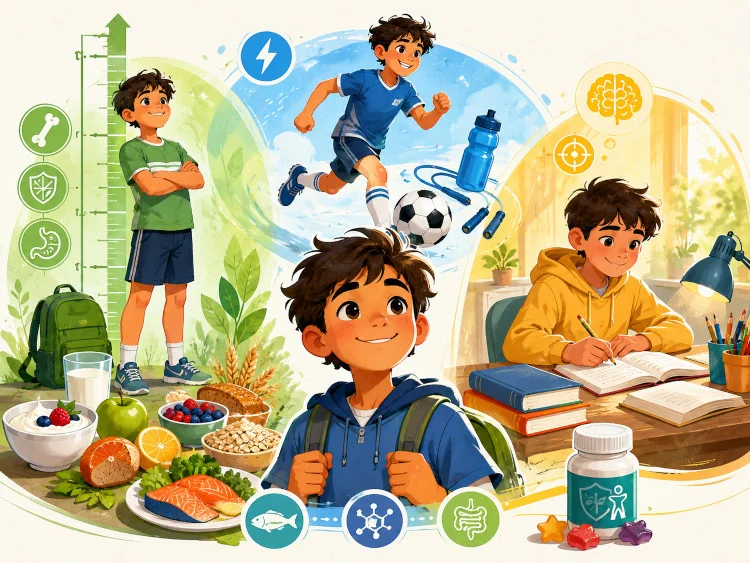
Vitamin D for Kids: Benefits, Dosage, Deficiency, and How to Take It
Vitamin D for kids is important not only for strong bones, but also for a healthy immune system, overall well-being, and balanced development. Many parents want to understand what the right vitamin D dosage for kids is, how to recognize vitamin D deficiency in children, and how to give vitamin D to a child in order to support health every day.
⚡ Quick facts parents should know
kids need vitamin D every day
vitamin D deficiency in children is very common
it is especially important in autumn and winter
it supports immunity, growth, and development
🛡️ How vitamin D supports your child’s immune system
Vitamin D plays an important role in the immune system and helps the body respond more effectively to viruses.
This is especially important during the colder months, when children get sick more often, which is why many parents look for ways to support a child’s immune system during the cold and flu season in kids to help reduce the frequency of illness.
In addition, vitamin D contributes to nervous system development, so when levels are sufficient, children often concentrate better and cope more easily with daily demands.
✨ What vitamin D does for children
🌞 supports immune health
🦴 helps healthy bone growth
🧠 supports brain development and attention
💪 may help reduce frequent colds
🔍 Vitamin D deficiency in children: symptoms
Vitamin D deficiency can develop gradually and may go unnoticed for a long time.
A child may get sick more often, feel tired more quickly, and become less active. Sleep problems and reduced appetite may also appear.
In these situations, parents often look for ways to boost a child’s immune system naturally through natural immune support for kids in order to support the body in a gentle and safe way.
👶 A situation many parents know well
After starting daycare or preschool, many children begin getting sick more often. This is often related to immune system stress and the body’s adaptation process.
In many cases, it turns out that the child has low vitamin D levels, and after those levels are corrected, the child’s overall condition gradually improves.
📊 Vitamin D dosage for kids by age
Child’s age
Daily dosage
0–12 months
400–1000 IU
1–3 years
600–1000 IU
4–10 years
800–1500 IU
📌 A common question is: how much vitamin D should I give my child? The exact dosage is best chosen individually.
📅 When kids especially need vitamin D
The need for vitamin D increases during periods when a child gets less sun exposure, is growing actively, or is dealing with infections more often.
This is especially relevant in winter — that is when parents most often search whether children need vitamin D in winter, since natural production is almost absent.
During these periods, many parents also look into what vitamins to give kids for frequent colds, including vitamin C for kids with colds and low immunity, to strengthen the body’s defenses.
🌿 Sources of vitamin D
The main source of vitamin D is sunlight, but it is often not enough.
Diet plays a supporting role, but it rarely covers the full need, so in most cases an additional supplement is required.
Parents also pay attention to a broader approach and look into the best vitamins for kids’ immune support, including vitamin C and zinc for kids for immune support, to improve the overall effect.
🧴 How to choose vitamin D for your child
The choice of vitamin D affects how effective supplementation will be.
For children, liquid forms are usually preferred because they are easier to dose. It is also important to look at the ingredient list and avoid unnecessary additives.
🛒 Choose vitamin D for your child with immune support benefits
Vitamin D is best given daily and with food to improve absorption.
Parents also often ask whether vitamin D can be combined with other supplements, such as vitamin C for kids’ immune support, and in most cases this is acceptable.
❌ Common mistakes parents make
giving it irregularly
using the wrong dosage
stopping supplementation during summer
not checking vitamin D levels
⚠️ What parents should know before starting
Before starting vitamin D, it is recommended to consult a doctor and, if needed, check your child’s vitamin D level.
Searches for symptoms of vitamin D overdose in children are becoming more common, so it is important to follow the recommended dosage.
Vitamin C for kids: benefits, signs of deficiency, age-based dosage, natural sources, and tips on how to choose the right vitamin C for children for everyday dietary support.
A winter guide for parents: vitamin D for children in winter, vitamin C with zinc, diet, walks, sleep and natural immune support, to make it easier to compare the composition.