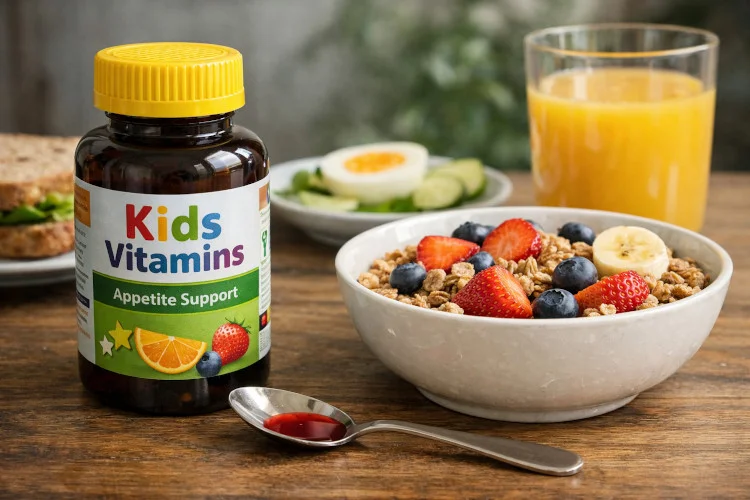

When a child turns 3, parents often start asking several questions at once: does anything need to be added to the diet, how to support the body during cold season, what to do about poor appetite, and how not to buy something unnecessary. At this age, children grow quickly, become more selective with food, start interacting with other children more often, and go through daycare or preschool adjustment in very different ways. That is why vitamins for 3-year-olds interest many parents not as a “trendy bottle,” but as a clear and practical form of support.
It is important to say the main thing right away: even good supplements do not replace proper sleep, a varied diet, outdoor walks, and a stable routine. But in some situations, they really can be useful — especially if a child eats a limited range of foods, gets sick often, gets tired quickly, or struggles during seasonal stress.
🟡 What Vitamins Do 3-Year-Olds Need for Growth, Immunity, and Everyday Support?
🟢 Best Vitamins for 3-Year-Olds: Which Nutrients Really Matter?
🟢 Which Vitamins to Choose for a 3-Year-Old Depending on Diet, Immunity, and Appetite
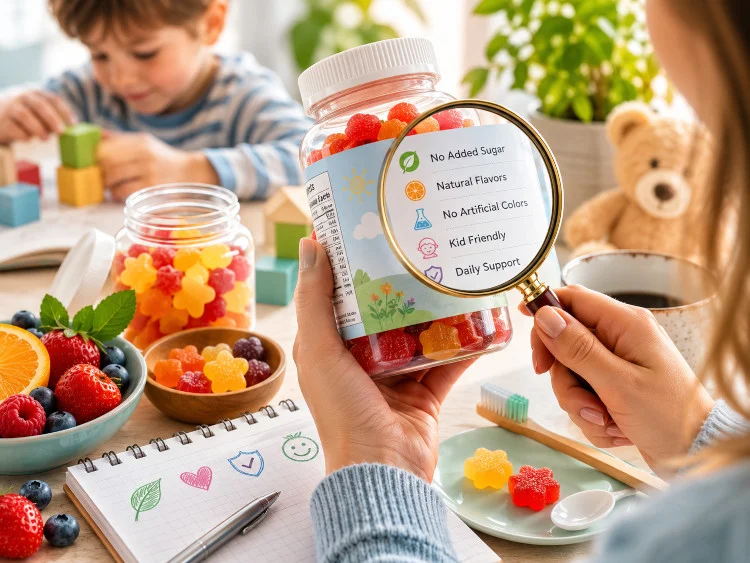
🟠 How to Choose the Best Vitamins for 3-Year-Olds: 5 Criteria for Parents
🔵 Vitamins for Immunity in 3-Year-Olds: What to Choose During Cold Season and Daycare Adjustment
🟣 Vitamins for 3-Year-Olds with Poor Appetite, Picky Eating, and a Limited Diet
🟤 What to Avoid in Vitamins for 3-Year-Olds: Excess Sugar, Artificial Colors, and Overloaded Formulas
🔴 Common Mistakes Parents Make When Choosing Vitamins for 3-Year-Olds
💬 Common Parent Questions: Which Vitamins Should You Give a 3-Year-Old?
🟡 What Vitamins Do 3-Year-Olds Need for Growth, Immunity, and Everyday Support?
At age 3, a child’s body is still developing actively. During this period, parents usually focus not on one single vitamin, but on overall support: growth, appetite, immunity, eating habits, and how well the child handles everyday demands.
That is why many parents are not looking for the “strongest” complex, but for a balanced everyday option with a clear formula. For this kind of need, they usually choose vitamins for 3-year-olds with a basic formula for daily support.
At this age, parents most often consider:
- vitamin D;
- vitamin C;
- B vitamins;
- vitamin A;
- zinc;
- sometimes calcium and magnesium.
But even useful nutrients do not automatically make a product a good one. For parents, other things matter more: whether the formula is age-appropriate, whether it contains unnecessary extras, and whether the child will actually accept the form comfortably.
🟢 Best Vitamins for 3-Year-Olds: Which Nutrients Really Matter?
When parents search for the best vitamins for 3-year-olds, it is easy to get lost among syrups, gummies, drops, and multivitamin blends. In practice, it becomes much easier to choose when you understand why a certain product may be needed in the first place.
Vitamin D is most often considered for bones, teeth, growth, and normal calcium absorption. Vitamin C and zinc usually interest parents during cold season. B vitamins are often mentioned in connection with appetite, metabolism, and overall energy. Vitamin A matters for vision and the condition of mucous membranes. Sometimes parents also choose products with calcium and magnesium if they want to focus on growth and development.
But a truly strong choice for a 3-year-old is not the product with the highest number of ingredients. It is the one that:
- matches the child’s age;
- is not overloaded with sugar and artificial colors;
- has a clear purpose;
- is convenient for the child;
- does not duplicate other supplements.
This is usually the approach that helps parents choose the best vitamins for 3-year-olds without unnecessary spending and unrealistic expectations.
🟢 Which Vitamins to Choose for a 3-Year-Old Depending on Diet, Immunity, and Appetite
| Situation | What worries parents most | What to do in this situation |
|---|---|---|
| The child eats inconsistently | One day there is appetite, the next day almost nothing gets eaten | Do not rush to buy a strong multi-ingredient complex. Start with simple vitamins for 3-year-olds with a basic formula and an easy daily format |
| The child gets sick often or attends daycare | Frequent colds, adapting to a group setting, weakness after illness | Focus on gentle seasonal support: choose formulas with vitamin D, vitamin C, and zinc without an overloaded ingredient list |
| The child is a picky eater | Refuses vegetables, meat, fish, or dairy | Choose formulas for children with a limited diet, without unnecessary ingredients and with basic nutritional support |
| Poor appetite lasts for a long time | Eats very little, feeding is difficult, loses interest in food quickly | Do not look for a “magic fix,” but for gentle vitamins for 3-year-olds for appetite with B vitamins and a format the child accepts without stress |
| Everyday support is needed | Parents want to cover basic needs without overdoing it | Choose a calm daily formula: no excess sugar, no harsh flavorings, no unnecessary colors, and no inflated doses |
| The child dislikes syrups and capsules | Refuses to take the vitamin product | Change the form, not necessarily the formula: consider drops, powders, or an age-appropriate chewable format |
| The child is sensitive to ingredients | Concerns about colors, sugar, flavorings, or reactions to new products | Stick to a short, clear ingredient list without unnecessary extras, and introduce new products one at a time |
🟠 How to Choose the Best Vitamins for 3-Year-Olds: 5 Criteria for Parents
To choose a suitable product and avoid paying extra for marketing promises, it helps to keep five simple criteria in mind.
1. Age label 3+
The product should be made specifically for children of this age. Formulas for older children may have different doses and ingredient profiles.
2. Clear ingredient list
The fewer unnecessary additives, the better. It is ideal when parents can easily understand why each ingredient is included.
3. Convenient form
If the child refuses syrup, even a good formula will not help. It is important to choose a form that can actually be given comfortably.
4. A formula for a specific goal
A big multivitamin complex is not always necessary. Sometimes a careful everyday support option makes more sense than a universal product “for everything.”
5. No overload of sugar and additives
The younger the child, the more valuable a calm formula is, without excess sweeteners, artificial colors, and unnecessary flavoring.
These are the criteria that most often help parents tell the difference between a genuinely useful product and one that is simply well-packaged.
Best Vitamins for 3-Year-Olds for Daily Support, Immunity, and Appetite
The Smurfs
Chewable multivitamins for children aged 3+, berry flavor
- Age: 3+
- Form: Chewable
- Flavor: Berry
You will be redirected to our partner’s website.
Trace
Liquid multivitamins for kids — tropical punch
- Age: From 1 to 3 years old
- Form: Liquids
- Flavor: tropical punch
You will be redirected to our partner’s website.
ChildLife Essentials
Sugar-free multivitamin gummy chews, Natural strawberry and lemon
- Age: From 4 years old
- Form: Chewable
- Flavor: Natural strawberry and lemon
You will be redirected to our partner’s website.
🔵 Vitamins for Immunity in 3-Year-Olds: What to Choose During Cold Season and Daycare Adjustment
One of the most common parent searches is vitamins for immunity in 3-year-olds. This usually comes up in two situations: when a child starts daycare or when the season of frequent colds begins.
Here it is important to stay realistic. No complex can guarantee that a child will stop getting sick. But gentle and reasonable support really can be helpful when the body is dealing with increased demands. Most often, parents look at vitamin D, vitamin C, and zinc, as well as moderate formulas without an excessively long ingredient list.
During such periods, parents more often pay attention to vitamins for immunity in 3-year-olds when gentle seasonal support is needed without an overloaded formula.
Parents usually start thinking about this kind of support if the child:
- brings home frequent colds from daycare;
- takes a long time to recover after illness;
- eats worse during demanding seasonal periods;
- gets tired more quickly;
- struggles with group-setting adjustment.
But even in these cases, it is usually better to choose not the most “packed” formula, but one that matches the child’s age and has a balanced composition.
🟣 Vitamins for 3-Year-Olds with Poor Appetite, Picky Eating, and a Limited Diet
If a 3-year-old eats very selectively, parents quickly start looking for vitamins for 3-year-olds for appetite. This is a natural and very common search: some children stop eating vegetables, some refuse meat or fish, and some agree to eat only a few familiar foods for weeks.
But here it is important not to expect instant results. Poor appetite is not always directly linked to a vitamin deficiency. Sometimes it is simply an age-related phase, a response to stress, a change in routine, a growth spurt, or ordinary food selectiveness. If the diet is truly poor and monotonous, then gentle nutritional support may make sense.
If a child eats very selectively, parents often pay attention to vitamins for 3-year-olds for appetite as additional support for a limited diet.
Parents should remember that if appetite problems last a long time, it is important to look not only at supplements, but at the full picture — routine, food variety, response to new meals, and tolerance of different formats.
🟤 What to Avoid in Vitamins for 3-Year-Olds: Excess Sugar, Artificial Colors, and Overloaded Formulas
One of the most useful guidelines for parents is not only understanding what to look for, but also knowing what is better to avoid. Even if a product looks bright and promises “everything at once,” that does not automatically make it a strong choice.
Parents usually become cautious about:
- too much sugar;
- a high amount of flavorings;
- bright artificial colors;
- an ingredient list that is too long without a clear purpose;
- overlap with other supplements;
- products that are not age-appropriate.
The younger the child, the more valuable a calm and transparent formula tends to be. For parents, this is often the best path: not looking for a miracle complex, but choosing something that truly matches the child’s age and actual needs.
🔴 Common Mistakes Parents Make When Choosing Vitamins for 3-Year-Olds
The first common mistake is choosing a product based on packaging, taste, or advertising. The second is buying a universal multi-ingredient complex “just in case,” without understanding why it is needed right now. The third is combining several supplements at once without noticing ingredient overlap.
Another mistake is expecting vitamins for 3-year-olds to quickly solve everything at once: appetite, immunity, sleep, and overall well-being. In practice, supplements only work as one part of a broader care system. The more realistic the expectations and the more precise the choice, the more useful the result tends to be.
✅ Which Vitamins for 3-Year-Olds Should Parents Choose? The Main Takeaway Without Hype
If we sum it up, good vitamins for a 3-year-old are not necessarily the most expensive or the most heavily advertised products. What matters much more is that they match the child’s age, have a clear formula, come in a convenient format, and solve a specific need.
Some children need more everyday support, others need a gentle focus on immunity during cold season, and others do better with a mild formula for limited diets and poor appetite. This calm and specific approach is usually what helps parents choose the best vitamins for 3-year-olds without overload and without unnecessary expectations.
💬 Common Parent Questions: Which Vitamins Should You Give a 3-Year-Old?

No, not all of them. If a child eats a varied diet, develops normally, and feels well without extra support, the need for a complex may be minimal.
Parents usually look at vitamin D, vitamin C, B vitamins, and zinc. The actual choice depends on diet, season, and the specific goal.
They can be part of overall support if the diet is monotonous and the child eats a limited range of foods. But they are not a universal or instant solution.
Parents most often prefer drops, syrups, powders, and some chewable formats. The important thing is that the form does not cause resistance and is age-appropriate.
Usually, it is better not to do that without a clear reason, because some vitamins and minerals may overlap.
Look at the age label, moderate dosages, no excess sugar, and a clear ingredient list without unnecessary additives.
📌 What Parents Should Know Before Buying Vitamins for 3-Year-Olds
This article is for informational purposes and helps parents better understand the topic, but it does not replace an individual approach. If a child has noticeable symptoms, allergic reactions, chronic conditions, dietary specifics, or a suspected deficiency, any supplement should be selected with extra caution.
The calmest and safest path is to choose vitamins for 3-year-olds not “just in case,” but for a specific goal: everyday support, seasonal stress, or a limited diet situation. The clearer the purpose and the cleaner the formula, the easier it is to make a good choice.