Many parents look for dye free vitamins for kids when they start paying closer attention not only to vitamin C, D3, zinc, or probiotics, but also to the full ingredient list. This matters especially when a child is prone to allergies, has sensitive digestion, or has already reacted to brightly colored sweets, drinks, chewables, or gummy supplements.
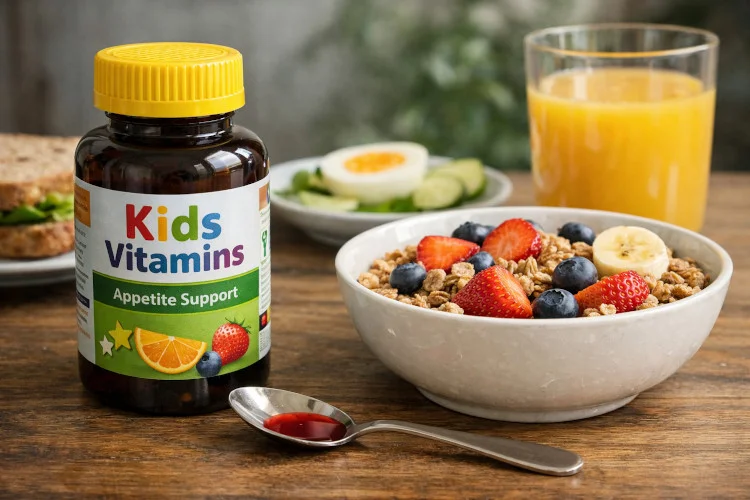
Children’s vitamins often look very appealing on the shelf: red bears, orange slices, purple gummies, bright fruit-flavored syrups. Kids may like them, but parents should remember one simple thing: bright color does not mean a better formula. Sometimes color is added only for appearance and flavor association — “strawberry,” “orange,” “berries.”
That is why choosing dye-free vitamins for children should never be based only on front-label claims. The whole label matters. The key question is simple: what was added for real nutritional support, and what was added only for color, smell, and visual appeal?
What Parents Should Check First
Brightly colored vitamins are not necessarily better than more neutral-looking formulas.
Colorants may be natural or artificial, but either type should be evaluated in the context of the whole formula.
In chewable vitamins, syrups, and gummies, colors often appear together with flavors, acids, and sweeteners.
If a child is prone to allergies or sensitivity, it is better to choose formulas without unnecessary visual additives.
For daily use, a short ingredient list, clear dosage, and no overlap with other supplements are especially important.
Quick Guide Before Buying
Dye-free vitamins should be chosen not by the color of the gummy or the pretty image on the bottle, but by the ingredient list. Parents need to understand what gives the product its color, whether it contains artificial colors, fruit concentrates, flavors, sweeteners, and whether those ingredients are really necessary for the child.
What To Understand Before Choosing Dye-Free Vitamins
- 🎨 How to tell if children’s vitamins contain dyes
- 🏷️ Where to find dyes on a children’s vitamin label
- 🌿 Natural vs artificial dyes in children’s vitamins: how to tell the difference
- 🍊 Which dye-free children’s supplements need the closest ingredient check
- 🤍 Dye-free vitamins for kids with allergies and sensitive digestion
🧭 How Bio Kids Reviews Children’s Vitamin Ingredients
At Bio Kids, we look at children’s supplements as possible support, not as a replacement for food, sleep, outdoor activity, or medical advice. Parents should focus not on a colorful bottle or loud promises, but on a clear formula: active nutrients, dosage, age range, form, and additional ingredients.
When a parent chooses natural immune support supplements without dyes, it is important to check not only the active ingredients, but also the color source, flavors, sweeteners, and other components used mainly for taste and appearance.
If a child takes a vitamin complex regularly, inactive ingredients become especially important. What a child receives every day should not be overloaded with dyes, flavors, and decorative ingredients added only to make the product look more attractive.
🎨 How to tell if children’s vitamins contain dyes
Dyes in children’s vitamins are not used to make the product more beneficial. Most often, they are added for appearance: to make a gummy red, a syrup orange, or a chewable tablet look “berry-flavored” or “fruit-flavored.”
Color sources are especially common in gummies, jelly vitamins, chewable tablets, syrups, fruit-flavored powders, and multivitamin complexes. These forms need to appeal to children, so manufacturers work not only with the nutrient formula, but also with color, smell, and texture.
What Dye Names To Look For On The Package
Dyes may be listed in different ways. Sometimes the label is clear: artificial colors, synthetic colors, no artificial colors. Sometimes it uses specific names: Red 40, Yellow 5, Blue 1, FD&C colors.
In more natural formulas, color may come from beta-carotene, annatto, turmeric, beetroot powder, spirulina extract, paprika extract, or fruit and vegetable juice concentrates.
Parents do not need to memorize every ingredient name. The practical rule is simple: if the product is very bright, look at the label and find where that color comes from.
🏷️ Where to find dyes on a children’s vitamin label
Most parents first look at the active nutrients: vitamin C, vitamin D, zinc, iodine, probiotics. That is useful, but for dyes, another section matters more — the full ingredient list.
Dyes are usually not found in the supplement facts panel. They are more often listed among inactive or supporting ingredients. On English labels, this section may appear as Other Ingredients, Inactive Ingredients, or simply Ingredients.
For regular use, parents often look for daily dye free vitamins for kids, where the formula is easier to compare: less color for appearance, fewer flavor additives, and clearer dosage.
What To Check First On A Dye-Free Vitamin Label
First, look for direct mentions of artificial colors: artificial colors, FD&C colors, synthetic colors, Red 40, Yellow 5, Blue 1. If these names appear, it does not automatically make the product “bad,” but for a sensitive child, a simpler formula may be a better choice.
Then check natural color sources: fruit and vegetable concentrates, beetroot, turmeric, beta-carotene, annatto, paprika, spirulina. These may look like a gentler option, but they are still part of the formula and may not be necessary for daily use.
The most important things to check are:
- where color is listed: artificial colors, FD&C, fruit concentrates;
- whether dyes, flavors, and sweeteners appear together;
- whether the age range and dosage are appropriate;
- whether vitamin D, A, iodine, or iron overlap with other supplements.
Why “No Artificial Colors” Does Not Always Mean “No Dyes”
The phrase “no artificial colors” may mean there are no synthetic dyes, but the product may still be colored using natural sources. A gummy may be colored with beetroot, turmeric, carrot, berry concentrates, or beta-carotene.
That may be acceptable, but parents should not stop at one claim. How to read children’s vitamin labels means looking at the whole formula: color, taste, flavors, sweeteners, acids, allergens, and dosage.
🌿 Natural vs artificial dyes in children’s vitamins: how to tell the difference
Natural dyes are usually derived from plants, fruits, vegetables, or algae. On labels, they may appear as beetroot powder, turmeric, beta-carotene, annatto, spirulina extract, paprika extract, fruit juice concentrate, or vegetable juice concentrate.
Artificial dyes are produced technologically and are often used for strong, stable color. On labels, they may appear as artificial colors, synthetic colors, FD&C colors, Red 40, Yellow 5, or Blue 1.
The main point is not to divide everything too simply into “natural is good” and “artificial is bad.” A natural color source may still cause an individual reaction, especially in a sensitive child. An artificial dye is a reason to check the formula and frequency of use more carefully, not a reason to panic.
| What You See On The Label | What it means in practice | What to pay attention to |
|---|---|---|
| Red 40, Yellow 5, Blue 1, FD&C colors | Artificial food dyes | For sensitive children, look for a simpler formula |
| Beetroot, turmeric, beta-carotene | Natural color source | Check whether flavors or sweeteners are also added |
| Fruit and vegetable concentrates | Color from fruits or vegetables | Do not assume the formula is automatically ideal |
| No artificial colors | No synthetic dyes | Check whether natural dyes are still present |
| Very bright gummies or syrup | Color may be part of marketing | Read the full ingredient list, not just the appearance |
Dye free vitamins for kids with simple ingredients
Culturelle
For children: probiotics, immune defense, super berries
- Age: from 3 to 12 years old
- Form: Chewable
- Flavor: Berry
You will be redirected to our partner’s website.
VitaWorks
Immune support for children, mixed berry flavor
- Age: 2+
- Form: Chewable
- Flavor: assorted berries
You will be redirected to our partner’s website.
Kidz
Daily chewable supplement for immune support
- Age: from 4 to 13 years old
- Form: Chewable
- Flavor: fruit
You will be redirected to our partner’s website.
🍊 Which dye-free children’s supplements need the closest ingredient check
Dyes are most common in forms where appearance affects whether a child wants to take the product. These include gummies, chewables, syrups, colorful multivitamins, fruit-flavored vitamin C, and some probiotics in chewable tablet or powder form.
Vitamin C is often made orange, yellow, or red so the taste feels associated with orange, lemon, or berry flavors. That is why, when choosing dye free vitamin C for kids parents should check not only dosage, but also how the product is colored and flavored.
Why Bright Color Does Not Mean More Benefit
Bright color helps a product look tastier. A child may choose a red gummy bear, orange slice, or purple chewable more quickly than a neutral tablet or colorless drops.
But the benefit of a product comes from active nutrients, dosage, form, and ingredient safety, not from its color. If color is added only to make the product more attractive, parents can choose a calmer formula.
🤍 Dye-free vitamins for kids with allergies and sensitive digestion
If a child is prone to allergies, rashes, itching, stomach discomfort, or has already reacted to brightly colored foods, the ingredient list deserves extra attention. Dyes matter, but so do flavors, sweeteners, acids, gelatin, plant extracts, and fruit concentrates.
If a child needs regular support for gut flora, dye free probiotics for kids should be compared not only by strains and form, but also by flavors, sweeteners, and color additives.
For sensitive children, it is better not to choose a formula by the rule “the tastier it is, the easier it will be to give.” Sometimes a more neutral product is more suitable precisely because it contains fewer additional ingredients.
How To Choose A Calm Formula Without Unnecessary Dyes
A good starting point is a short ingredient list, a clear form, appropriate age range, and the absence of several decorative components at once. If a product contains color, strong flavor, sour taste, sweeteners, and plant extracts all together, the formula becomes harder to evaluate.
When sensitivity is present, it is especially important not to introduce several new supplements at once. If a child already takes vitamin D, a probiotic, or a multivitamin, first compare the formulas and make sure there is no unnecessary overlap.
🩺 When To Talk To A Doctor Instead Of Choosing On Your Own
Parents should not choose children’s vitamin complexes on their own if a child has clear allergic reactions, frequent rashes, swelling, strong itching, chronic conditions, long-term digestive issues, or recurring complaints.
Medical advice is especially important if a child takes medication, already uses several supplements, has dietary restrictions, or the parent suspects a deficiency in iron, vitamin D, iodine, or other nutrients.
Iron, vitamin D, vitamin A, iodine, and high dosages require special caution. They should not be added “for prevention” without a clear reason. Natural extracts also do not become completely safe simply because they are plant-based.
❓ Common Questions About Dye-Free Vitamins For Kids

Do not rely on the front of the package. Open the full ingredient list. Artificial dyes may be listed as artificial colors, synthetic colors, FD&C colors, or by specific names such as Red 40, Yellow 5, or Blue 1.
If those names are not listed, it still does not always mean the product is completely dye-free. The color may come from natural sources such as beetroot, turmeric, beta-carotene, annatto, spirulina, or fruit and vegetable concentrates. That is why it is important to check the full ingredient list, not only the phrase “no artificial colors.”
Natural dyes are often perceived as a gentler option because they come from plants, vegetables, fruits, or algae. For many parents, this may be preferable, especially if they want to avoid synthetic colors or FD&C colors.
However, natural origin does not guarantee that a child will not react. Paprika extract, turmeric, annatto, or berry concentrates may still be unsuitable for sensitive children. It is better to evaluate the whole formula: flavors, sweeteners, acids, allergens, and how often the product will be used.
Bright color helps children perceive the product as tasty and familiar. An orange gummy feels like orange flavor, a red one suggests strawberry or cherry, and a purple one suggests berries. This can make supplements easier to accept, especially for children who dislike tablets or drops.
But color does not show vitamin quality. A product may be bright and still have an ordinary formula, while a neutral-looking product may be a better fit for the child. Appearance should not be the main selection criterion.
It depends on the formula, the child’s age, dosage, and sensitivity. If there is only one colorant, the formula is clear, the child has no reactions, and the product is used short-term according to instructions, it may be a normal situation.
For daily and long-term use, a simpler formula is usually a better choice. The more often a child takes a product, the more important the additional ingredients become: dyes, flavors, sweeteners, and acids. If there are allergies, rashes, sensitive digestion, or doubts, the choice should be discussed with a doctor.
Dyes are most often found in gummies, chewable tablets, syrups, sour vitamin products, colorful multivitamins, and fruit-flavored formulas. In these forms, appearance helps make the product more appealing to children.
Dyes are less common in simple drops, capsules, unflavored powders, or neutral sachets, but this is not a universal rule. Even a calm-looking form may contain flavors or other additional ingredients, so the label still needs to be read.
Start with the simplest possible formula: no artificial dyes, fewer flavors, no complex blend of plant extracts, and no unnecessary sweeteners. Check age range, dosage, form, and possible allergens.
If a child has already reacted to food additives, colorful sweets, or syrups, the most “tasty” and colorful option is not the safest starting point. With clear allergies, chronic conditions, or repeated symptoms, the formula should be discussed with a doctor.
✅ How To Choose Good Dye-Free Vitamins For Kids Without Misreading The Label
This article is useful for parents who want to learn how to read children’s vitamin labels and not rely only on colorful packaging. If you choose dye free vitamins for kids, start with the full ingredient list: artificial colors, FD&C colors, fruit concentrates, flavors, sweeteners, and other additional components.
Dye-free vitamins may be appropriate when a child needs specific support and the parent wants a calmer formula for daily or regular use. But in cases of clear allergies, chronic conditions, ongoing complaints, or dosage concerns, parents should not choose supplements on their own.
⚠️ What Parents Should Remember Before Choosing Children’s Supplements
This material is for informational purposes only and should not be treated as medical advice. Children’s supplements do not replace balanced nutrition, healthy sleep, outdoor activity, medical treatment, or professional consultation.
Bio Kids publishes independent educational materials about children’s vitamin ingredients, forms, formulas, and safe supplement selection, but it does not replace a pediatrician or another qualified healthcare professional.