
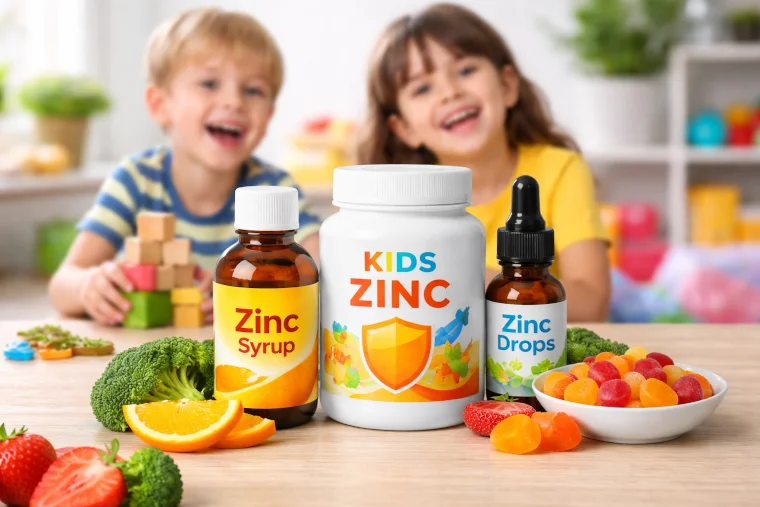
2. Benefits of Zinc for Kids
3. Signs Parents May Want to Notice
4. A Real-Life Situation Many Families Know
5. Zinc for Kids by Age: A Parent-Friendly Guide
6. When Zinc Is Especially Relevant
7. Food Sources of Zinc
8. How to Choose Zinc for a Child
9. How to Take Zinc Correctly
10. Common parental mistakes
11. Important Information Before Starting ⚠️
12. What Parents Often Ask About Zinc for Kids
13. What Parents Should Remember ✨
Zinc for kids is an important trace mineral the body needs every day. Parents often look for answers to questions like what zinc does for children, how to tell whether a child is getting enough from food, and which kids’ vitamins with zinc are suitable for their age. Zinc is involved in growth, cell renewal, immune function, skin and mucosal health, and it can also affect appetite and overall well-being. That is why the topic of zinc for children becomes especially relevant during periods of active growth, seasonal changes, and increased daily demands.
Important for Parents 👨👩👧
Zinc is not one of those nutrients parents think about every day, but its role in childhood is significant. It does not replace a balanced diet and it does not work on its own, yet it can help support the body’s natural growth and development processes. If a child’s diet is limited, appetite is inconsistent, or seasonal changes affect overall well-being, zinc is worth paying attention to.
Here is what matters most:
- children need zinc every day, but in age-appropriate amounts;
- it is best to choose based on form, composition, and ease of use;
- children’s supplements with zinc should not overlap unnecessarily;
- before starting, it is important to consider diet, age, and professional guidance.
Benefits of Zinc for Kids
Zinc is involved in many processes that are especially important during childhood. When a child is growing, the body needs resources for tissue formation, cell renewal, and adaptation to the environment. Zinc becomes part of that everyday support.
What zinc helps support in children:
- normal growth and development;
- healthy immune function;
- normal skin and mucosal condition;
- taste perception and appetite;
- tissue repair and recovery processes.
Parents often pay closer attention to zinc during daycare, school years, and seasonal transitions, when routines change, demands increase, and contact with outside factors becomes greater. During these periods, families often consider not only vitamin D for kids, but also options from the natural immunity for kids category when they want a calm and practical seasonal support routine.
Signs Parents May Want to Notice
Zinc deficiency is not always obvious right away. Sometimes it is not about a severe deficiency, but rather a situation where a child gets less zinc than their age and lifestyle may require. On the outside, this can look like a combination of non-specific signs.
What parents often notice:
- reduced or inconsistent appetite;
- greater sensitivity during cold season;
- dry skin;
- slower skin recovery after minor scrapes;
- brittle nails;
- general tiredness;
- more selective eating habits.
It is important to understand that these signs do not point only to zinc and are not a reason for self-diagnosis. They can, however, be a good reason to look more closely at the child’s diet and discuss the situation with a professional.
A Real-Life Situation Many Families Know
Imagine a common situation. A child is growing quickly, goes to daycare or school, eats selectively, enjoys pasta, baked foods, and dairy products, but is less interested in meat, legumes, and other mineral-rich foods. During the season, appetite becomes even less consistent and the diet becomes even narrower. In a situation like this, many parents start looking for gentle ways to support their child’s nutrition and consider zinc for kids as part of a thoughtful approach.
If the diet includes only a few sources of trace minerals and seasonal demands are higher than usual, some parents also look at combined options such as vitamin C with zinc for kids, especially when they want a convenient format for a short-term routine during times of increased attention to nutrition.
Zinc for Kids by Age: A Parent-Friendly Guide
| Child’s age | Daily zinc amount | What to pay attention to | Convenient form |
|---|---|---|---|
| 7–12 months | 3 mg | Active growth and expanding food variety | Drops or liquid form |
| 1–3 years | 3 mg | Selective eating and changing appetite | Drops, syrup |
| 4–8 years | 5 mg | Daycare, activity, and a wider diet | Syrup, chewable form |
| 9–13 years | 8 mg | School demands, growth, changing food habits | Chewable tablets, lozenges |
| 14–18 years | 9–11 mg | Intense growth and increased daily demands | Age-appropriate tablets or capsules |
In this table, the number of milligrams is not the only thing that matters. It is also important how easy the chosen form is for the child to take every day. Liquid options are often more practical for younger children, while older kids usually do better with chewable formats that have a clear dosage.
When Zinc Is Especially Relevant
There are times when paying closer attention to diet and zinc intake makes particular sense. This is not about a “magic support” solution, but about being more mindful of a child’s nutrition.
Parents most often think about zinc when:
- a child is growing quickly;
- eating has become more selective;
- the diet is low in meat, legumes, or whole grains;
- a busier season or routine change begins;
- the child goes to daycare, school, or activities and gets tired more easily;
- there is a need to support everyday nutrition during seasonal transitions.
During these periods, parents also often add other basic categories to their routine, such as vitamin C for kids or options for the cold season for kids, especially when the goal is to build a simple and practical seasonal support plan.
Food Sources of Zinc
Food should always be the first point of reference. Even when a supplement is being considered, it helps to understand which foods can provide zinc on a daily basis.
Main dietary sources of zinc:
- meat;
- poultry;
- fish;
- eggs;
- legumes;
- whole grains;
- nuts and seeds, if age-appropriate and safely served;
- dairy products.
In practice, though, it depends not only on the list of foods, but also on whether the child actually eats them regularly and in meaningful amounts. If the diet is limited to only a few favorite foods, real zinc intake may be lower than expected.
How to Choose Zinc for a Child
Choosing zinc for kids is best based on three criteria: age, form, and composition. For younger children, drops or syrup are often the easiest options, while older kids may prefer chewable tablets, lozenges, or other pleasant-tasting formats. The main goal is to make daily use easy and stress-free.
What to look at when choosing:
- age guidance on the label;
- the amount of zinc per serving;
- the delivery form: drops, syrup, chewable tablets;
- a simple formula without too much sugar or unnecessary extras;
- a clear usage routine;
- combinations with other nutrients only when there is a real need.
Choose Zinc for Kids by Age and Easy-to-Take Form
You will be redirected to our partner’s website.
You will be redirected to our partner’s website.
Zinc Plus
Zinc, natural mango and strawberry flavor
- Age: from 1 year
- Form: liquid
- Flavor: mango and strawberry
You will be redirected to our partner’s website.
How to Take Zinc Correctly
Zinc for children should only be given in a form appropriate for the child’s age and in a dosage that matches the product instructions or a professional recommendation. It is not a good idea to follow adult routines or split adult capsules by guesswork.
What matters when giving zinc:
- follow the age-appropriate dosage;
- consider the length of use stated by the manufacturer;
- do not combine several zinc-containing products at the same time without a clear reason;
- check multivitamin formulas to avoid doubling zinc;
- if using a course, give it consistently.
Different forms have their own practical differences. Syrups are often convenient for younger children, chewable formats are usually easier for older kids, and drops can make dosing more precise. The best choice is not the trendiest form, but the one that truly fits the child’s daily routine.
Common parental mistakes
Even a well-formulated product can be used less effectively if the basics are missed. Most mistakes are not about zinc itself, but about expectations and not paying enough attention to the label.
The most common mistakes:
- choosing a product without considering age;
- using several zinc products at the same time;
- assuming a higher dosage is always better;
- expecting a fast and obvious result;
- trying to replace a balanced diet with a supplement;
- ignoring the overall formula of the product.
A calm and well-informed approach works better than trying to solve everything quickly with one bottle of vitamins.
Important Information Before Starting ⚠️
Before adding zinc to a child’s routine in supplement form, it helps to look at the bigger picture. What does the child eat every day? Are they already taking a multivitamin? Is the chosen form suitable for their age? Is the dosage routine clear? These questions help avoid unnecessary purchases and an overloaded supplement routine.
If a child has special dietary patterns, chronic conditions, a sensitive stomach, or is already using other vitamin and mineral products, the decision is best made together with a healthcare professional. This matters even more if parents are considering longer use or combined formulas.
What Parents Often Ask About Zinc for Kids

Zinc is important for normal growth, cell renewal, appetite support, skin health, and natural immune function. It is one of the key trace minerals involved in many everyday processes in a child’s body.
Parents often notice a mix of signs such as unstable appetite, dry skin, selective eating, brittle nails, or general tiredness. Still, these signs are not specific only to zinc, so it is important to look at the overall diet and context.
That depends on the child’s age, the product form, and the usage routine. If the manufacturer recommends daily use in an age-appropriate dosage, it may be suitable as a course. The key is not to exceed the recommended amount and not to combine multiple zinc products unnecessarily.
If the need is specific, many parents prefer a standalone zinc product for kids. If broader seasonal support is needed, a combined formula may be more convenient. What matters most is a clear composition and child-appropriate dosing.
For younger children, drops or syrup are often the easiest. For older kids, chewable tablets or lozenges may be more convenient. The best form is the one that can be taken regularly without daily stress.
Yes, if the child’s diet is varied and regularly includes zinc-rich foods. But if a child eats selectively and avoids meat, legumes, or other mineral sources, some parents consider zinc for kids as a supplement alongside the diet.
What Parents Should Remember ✨
Zinc for kids is not just a supplement to give “just in case.” It is an important trace mineral involved in growth, cell renewal, normal appetite, and everyday nutritional support. Parents tend to think about it more during periods of active growth, selective eating, and seasonal changes. The main thing is not to look for a universal solution, but to consider the child’s age, diet, product form, and dosage. When chosen thoughtfully, zinc can become part of a calm and practical approach to supporting a child’s nutrition.